

Head of Decarbonisation Partnerships
Edited: 19 Feb 2026
15 min read



The Science Based Targets initiative (SBTi) is the leading global framework for setting corporate climate targets that are aligned with climate science and the goals of the Paris Agreement
If your organisation is considering setting science-based targets, or is being asked about them by investors, customers, or regulators, this guide explains what SBTi is, how science-based targets work, and the practical steps involved in setting and submitting them.
This article is for any business that wants to set climate targets that stand up to scrutiny.
What is the Science Based Targets initiative (SBTi)?
Science-Based Targets initiative is a global partnership that helps businesses set greenhouse gas reduction targets in line with the goals of the Paris Agreement.
SBTi is backed by organisations including:
CDP
UN Global Compact
World Resources Institute (WRI)
WWF
Its role is not to measure emissions for companies, but to validate whether a company’s climate targets are consistent with limiting global warming to 1.5°C.
What are science-based targets?
Science-based targets are emissions reduction targets that:
Are grounded in climate science
Align with a 1.5°C pathway
Cover relevant emissions scopes
Unlike generic sustainability goals, science-based targets follow defined methodologies and thresholds. This makes them comparable, credible, and increasingly expected.
In practice, science-based targets answer a simple question:
Is this company reducing emissions fast enough to do its fair share?
How science-based targets fit within a credible climate strategy
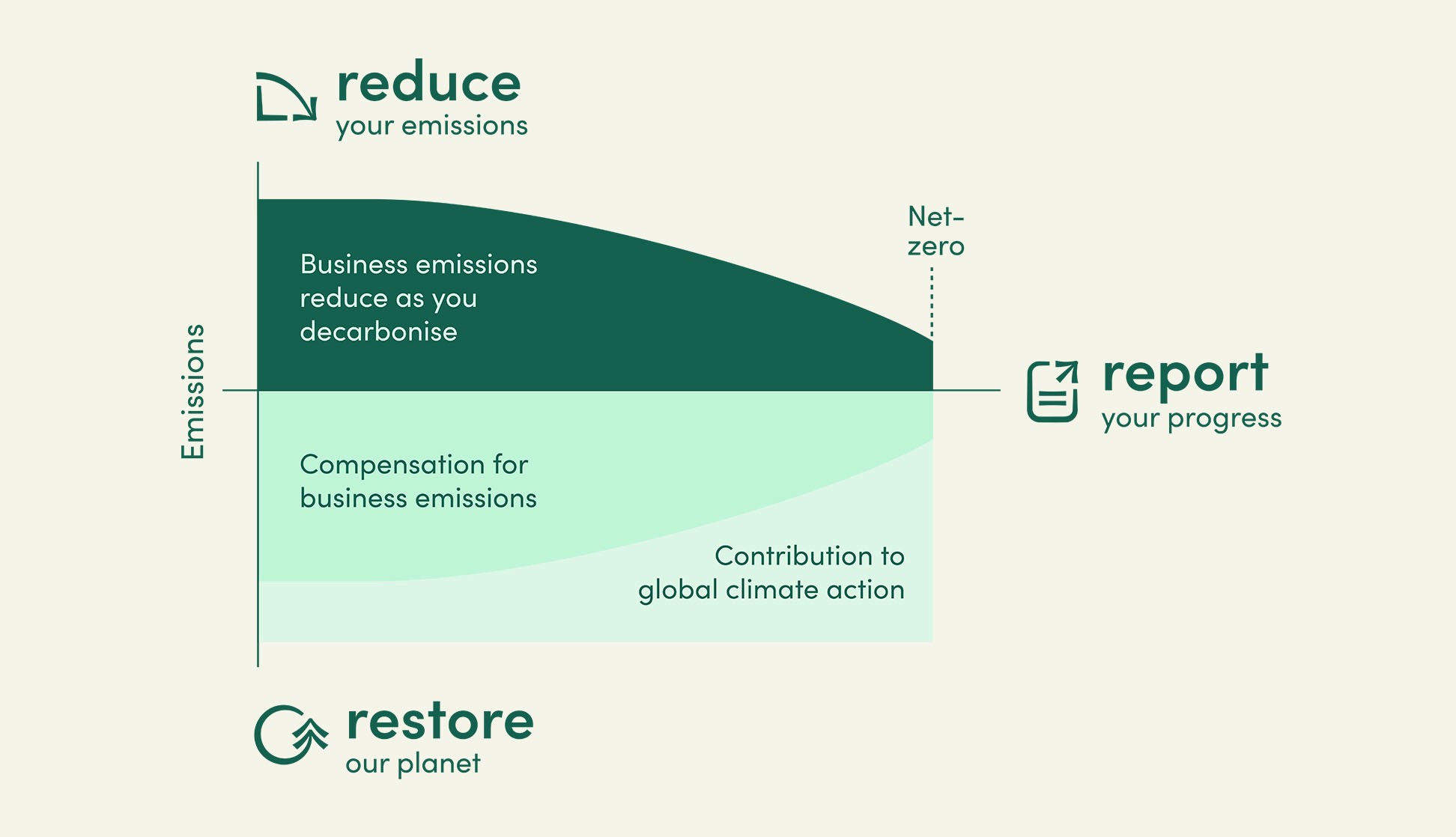
Science-based targets sit within the Reduce pillar of Ecologi’s 3Rs framework: Reduce, Restore, Report.
At its core, the 3Rs Framework serves as both an operational roadmap and a communications tool. It is designed to ensure that everyone within a business can understand the essential elements of climate action.
The three pillars represent interdependent stages of a complete strategy:
Reduce
Measure your Scope 1, 2 and 3 emissions.
Set short-term and long-term science-aligned emissions reduction targets.
Act to achieve the reduction targets.
Restore
Develop an Oxford Principles-aligned strategy for Beyond Value Chain Mitigation.
Compensate for unavoidable emissions through funding verified carbon avoidance and removal credits.
Contribute to global climate goals by funding broader restoration projects, including nature-based restoration.
Report
State your GHG inventory and reduction plans transparently.
Communicate your climate commitment to stakeholders.
Advocate for wider sector action.
The Science Based Targets initiative validates whether your emissions reduction targets align with climate science. It does not measure your emissions for you, and it does not define how you approach restoration, climate finance, or stakeholder reporting.
For that reason, SBTi validation should be treated as a critical milestone within the Reduce pillar, not the entire climate strategy.
Who should set SBTi targets?
Setting SBTi targets is voluntary, but expectations are shifting.
SBTi targets are increasingly expected for:
Large and mid-sized businesses
Companies with complex supply chains
Organisations making net-zero or climate leadership claims
Businesses responding to investor or procurement pressure
Even where not mandated by law, SBTi alignment is often treated as a signal of credibility.
How to set a science-based target (step by step)
This is the core process most organisations follow.
1. Measure your carbon emissions baseline
You must calculate a robust baseline covering:
Scope 1 emissions
Scope 2 emissions
Scope 3 emissions (where required)
Accuracy at this stage is critical; weak baselines undermine the entire submission.
Read more about how to measure and manage your carbon footprint in our article, here.
2. Choose your target boundary and ambition
Setting a science-based target requires clear decisions about which emissions are included and how ambitious the target needs to be.
SBTi requires companies to:
Set near-term targets aligned with a 1.5°C pathway
Define coverage thresholds across emissions scopes
Meet minimum ambition levels based on sector and emissions profile
Under the Reduce pillar of Ecologi’s 3Rs framework, science-based targets should be designed to drive meaningful emissions reductions across the value chain, not just meet minimum criteria.
In practice, this means:
Scope 1 and Scope 2 emissions must always be included and typically require absolute reductions
Scope 3 emissions must be included where they represent a significant share of total emissions, which is the case for most businesses
Target boundaries should reflect the full emissions profile, rather than focusing only on areas that are easiest to measure or reduce
SBTi sets minimum coverage thresholds to prevent selective targets that overstate progress while excluding material sources of emissions.
In practice, setting credible targets requires more than selecting percentages from an SBTi tool.
Organisations should:
Select a representative baseline year with robust data coverage
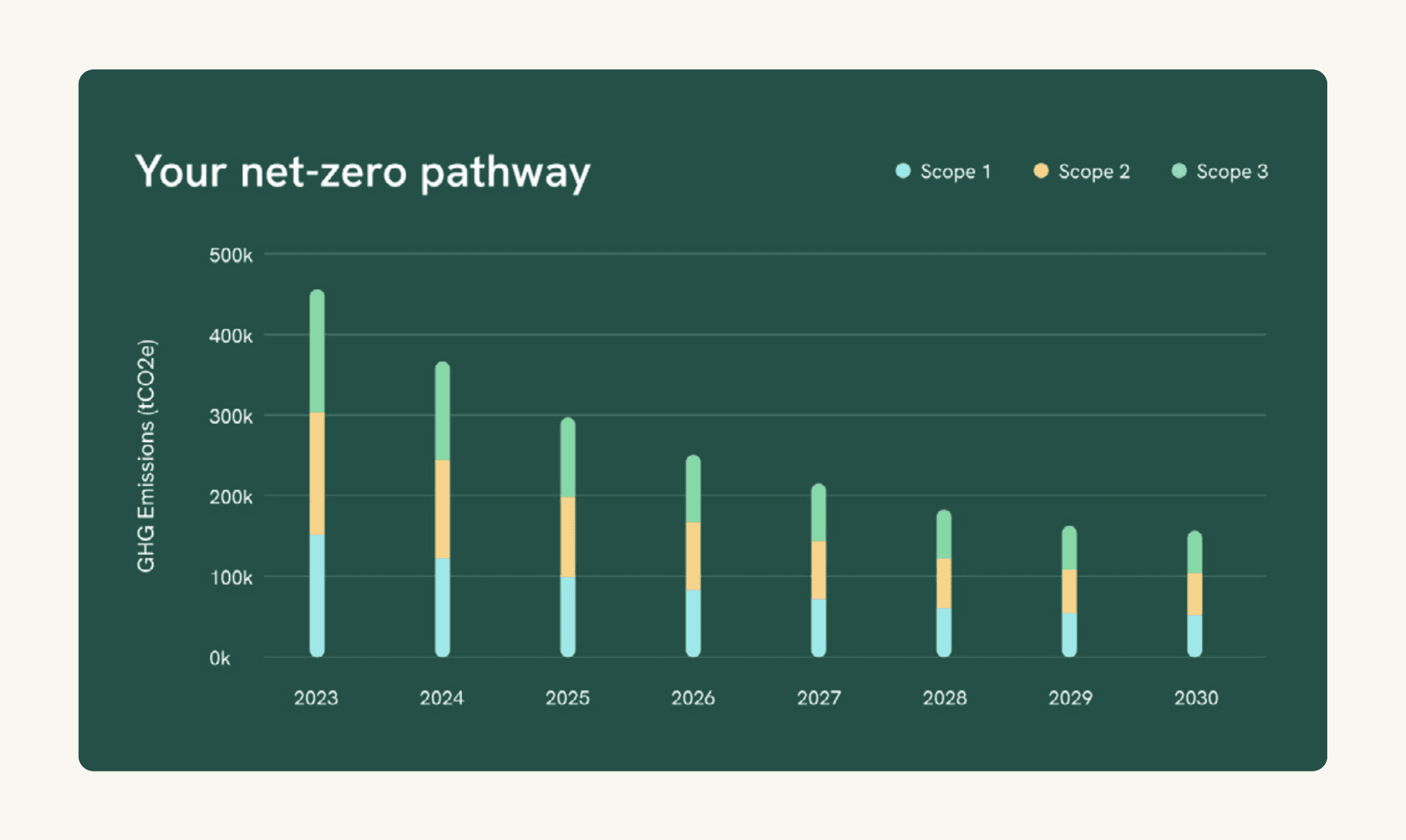
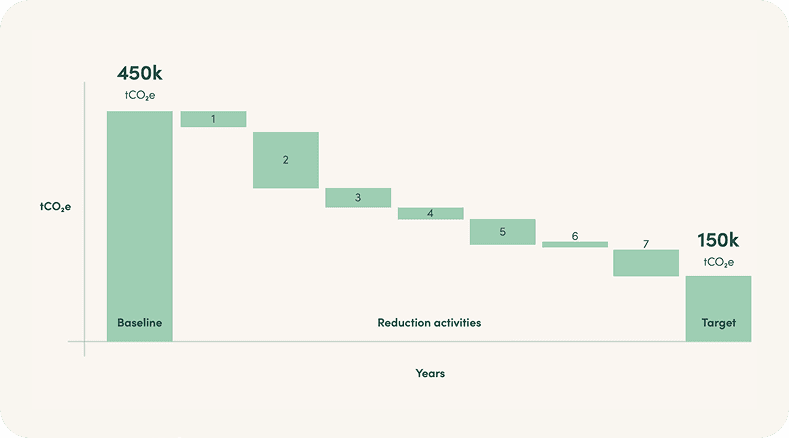
Develop a business-as-usual emissions trajectory reflecting expected growth
Model the gap between projected emissions and a 1.5°C-aligned reduction pathway
Identify priority reduction levers across operations and the value chain
Assess operational and financial feasibility of each intervention
This modelling step is critical. Without it, targets risk being technically compliant but operationally unrealistic.
3. Use SBTi target-setting tools
SBTi provides approved tools and methods to calculate:
Required reduction pathways
Target years
Scope-specific reductions
These tools ensure consistency across companies and sectors.
4. Submit targets to SBTi for validation
Targets are submitted to SBTi for independent review against its published criteria.
If approved, they are published on the SBTi website.
If rejected, companies must revise and resubmit.
Validation timelines vary depending on the complexity of the submission, scope coverage and data quality. In practice, many organisations experience review periods ranging from several weeks to a few months.
Delays are commonly caused by:
Incomplete Scope 3 coverage or justification
Inconsistencies between targets and emissions baselines
Ambition levels that do not meet SBTi thresholds
Validation confirms that targets meet SBTi criteria, but responsibility for delivery and ongoing progress remains with the company.
5. Track progress and communicate responsibly
Once validated, companies are expected to:
Track progress annually
Avoid overstating impact or progress
Science-based targets are not set and forget. Ongoing tracking and disclosure form the Report pillar of a credible climate strategy and help protect against greenwashing risk.
What is SBTi Net-Zero?
SBTi Net-Zero is a specific framework for long-term net-zero commitments.
It requires companies to:
Set near-term science-based targets
Commit to deep emissions reductions across the value chain
Use carbon removals only for residual emissions
SBTi Net-Zero is more demanding than traditional net-zero claims and is designed to prevent misleading offset-heavy strategies.

How SBTi fits within a credible climate strategy
The Science-Based Targets initiative focuses on reducing emissions within a company’s own operations and value chain. This is the foundation of credible climate action, but it is not the whole strategy.
At Ecologi, we align the SBTi within our 3Rs framework to ensure climate targets translate into real-world impact:
Reduce - Measure emissions accurately and cut them in line with science-based targets across Scopes 1, 2 and 3.
Restore - Take responsibility for ongoing emissions by supporting high-quality climate and nature projects beyond the value chain, without using offsets as a substitute for reductions.
Report - Track progress transparently, communicate responsibly, and ensure climate claims stand up to scrutiny from investors, customers and regulators.
This approach ensures SBTi targets are not treated as a one-off validation exercise, but as part of a long-term, credible climate strategy grounded in science, transparency and integrity.
Is SBTi certification mandatory?
No. SBTi is not a legal requirement.
However:
Many organisations treat SBTi validation as a de facto standard
Stakeholders increasingly question targets that are not science-based
Regulators are scrutinising unsupported climate claims more closely
In this context, SBTi often functions as a defensive credibility measure as much as a leadership signal.
Common mistakes when setting SBTi targets
Many organisations struggle with similar challenges, including:
Incomplete or inaccurate emissions baselines
Underestimating Scope 3 complexity
Confusing intensity targets with absolute reductions
Treating offsets as a substitute for reductions
Making claims before targets are validated
Avoiding these mistakes early saves time, cost, and reputational risk.
How Ecologi supports businesses on their SBTi journey
Preparing for SBTi requires more than submitting targets. It depends on having the right data, assumptions and internal processes in place to support long-term delivery.
Ecologi supports businesses across the full journey by helping them build the foundations required for credible science-based targets.
Under the Reduce pillar, we support organisations to:
Establish accurate emissions baselines across Scopes 1, 2 and relevant Scope 3 categories
Model emissions reduction pathways aligned with SBTi criteria, including near-term ambition and boundary decisions
Identify practical reduction levers that support delivery against targets over time
Under the Report pillar, we help businesses:
Track progress against targets year on year
State their GHG inventory and reduction plans transparently
Align disclosures with frameworks such as SECR, CSRD, CDP and SBTi
Communicate climate commitments clearly while avoiding greenwashing risk
Under the Restore pillar, we support businesses to:
Develop an Oxford Principles-aligned strategy for Beyond Value Chain Mitigation
Set a science-aligned internal carbon price
Compensate for unavoidable emissions through verified carbon avoidance and removal credits
Contribute to global climate goals by funding nature-based restoration and systemic climate solutions
This ensures SBTi alignment is embedded within a complete, credible climate leadership strategy.
We do not certify or validate SBTi targets, but we help businesses approach SBTi with confidence by ensuring the underlying data, modelling and strategy are robust.
Trusted by over 16,000 businesses, including more than 270 certified B Corps, Ecologi supports organisations at every stage of their climate journey.
Speak to a climate expert to understand whether SBTi is right for your organisation and how to approach it with confidence.